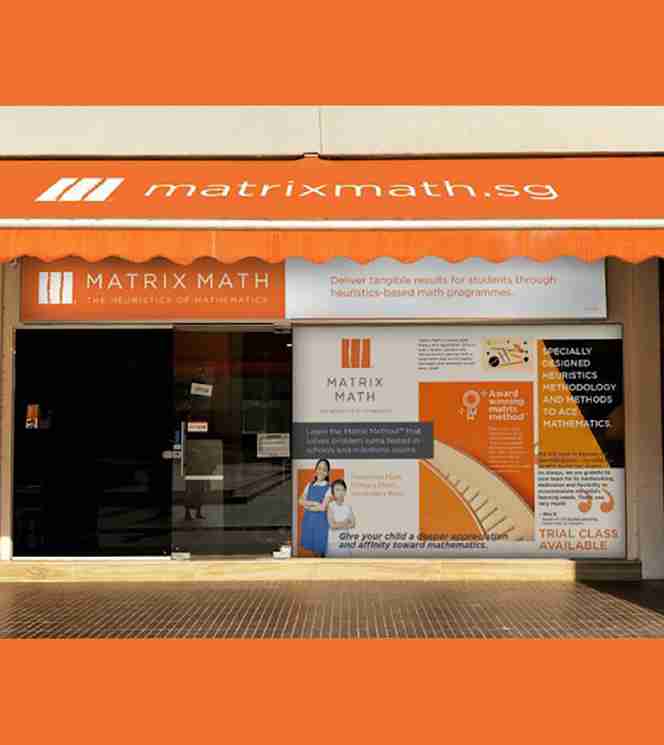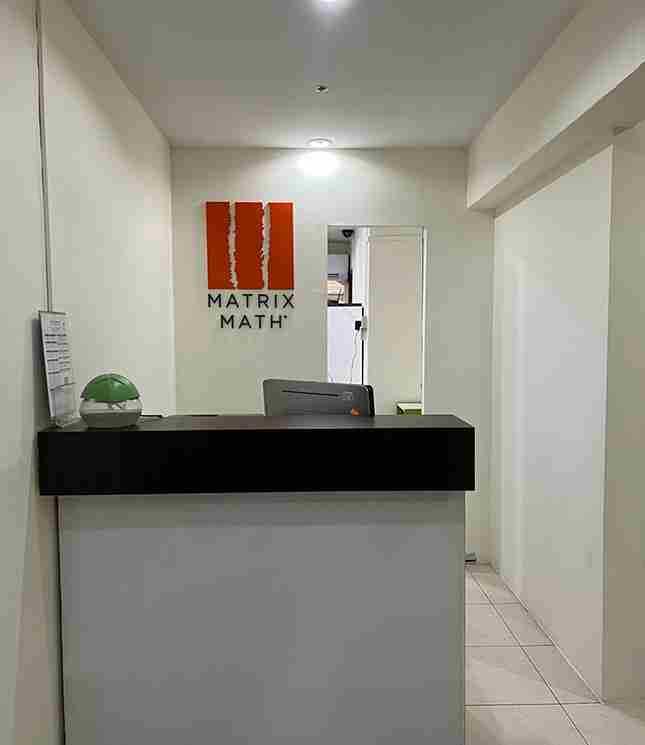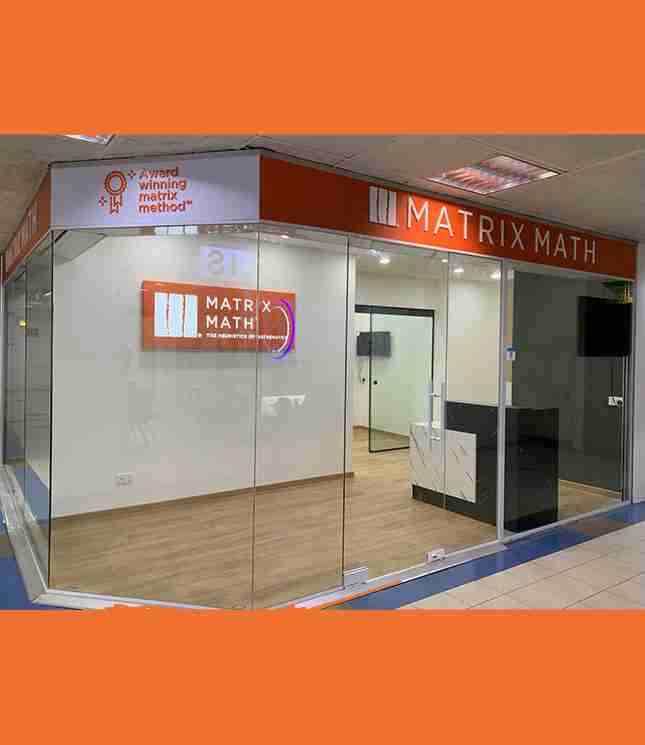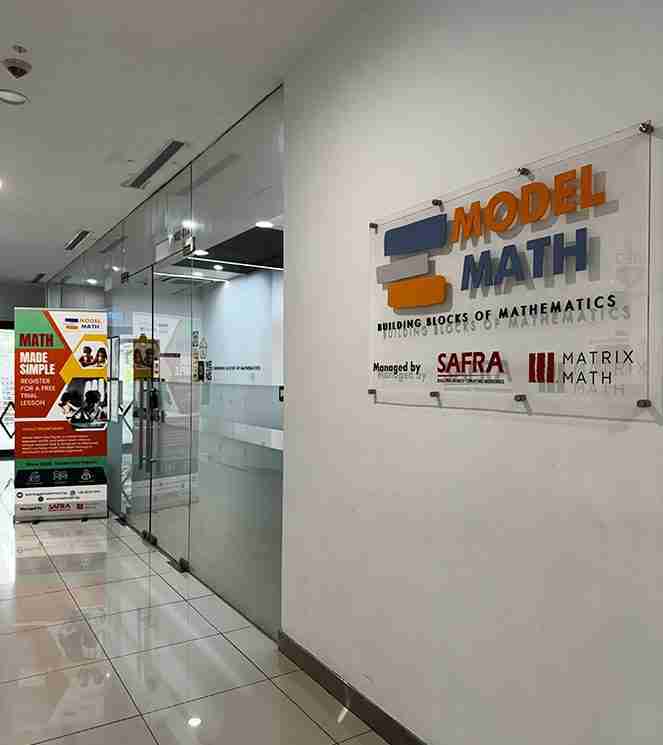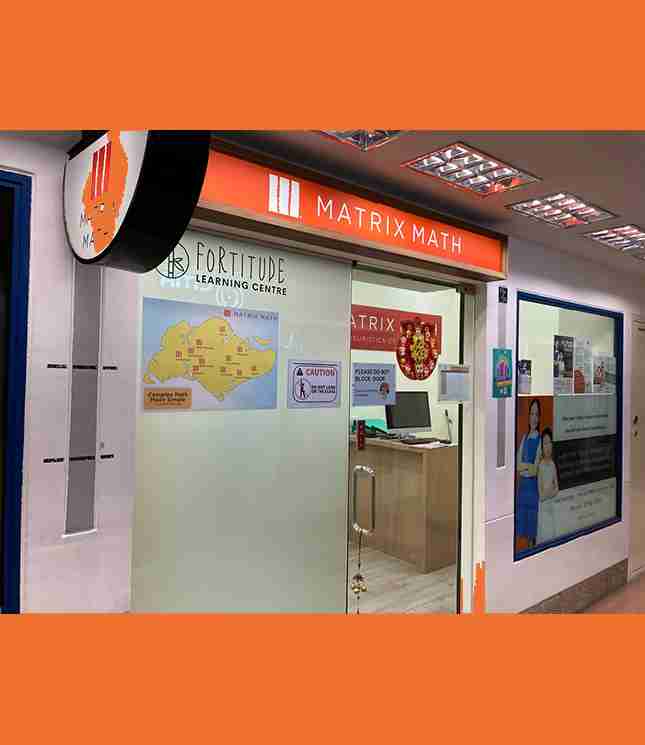














main banner img

Are you in need of a top-notch maths tuition centre in Singapore? We provide comprehensive class-based and online tuition for PSLE and O-Level maths. Your children will have their reasoning and problem-solving skills trained as we help them excel in mathematics.

main banner students
about left 1
about right 1
about left mobile 1
about right mobile 1

WELCOME TO

MATRIX MATH

BEST MATH TUITION SINGAPORE

At Matrix Math, we take pride in our innovative approach to math education for primary math tuition, secondary math tuition, PSLE revision and O level. The Matrix Method, which was originally developed in 2008, has undergone continuous refinement and improvement over the years. Our dedicated team of math specialists conducts extensive research to ensure that our programme remains in line with the MOE syllabus and addresses the most commonly tested concepts in schools.

Join us on this exciting journey of continuous improvement and witness the transformative power of the Matrix Method in empowering young minds to excel in math.

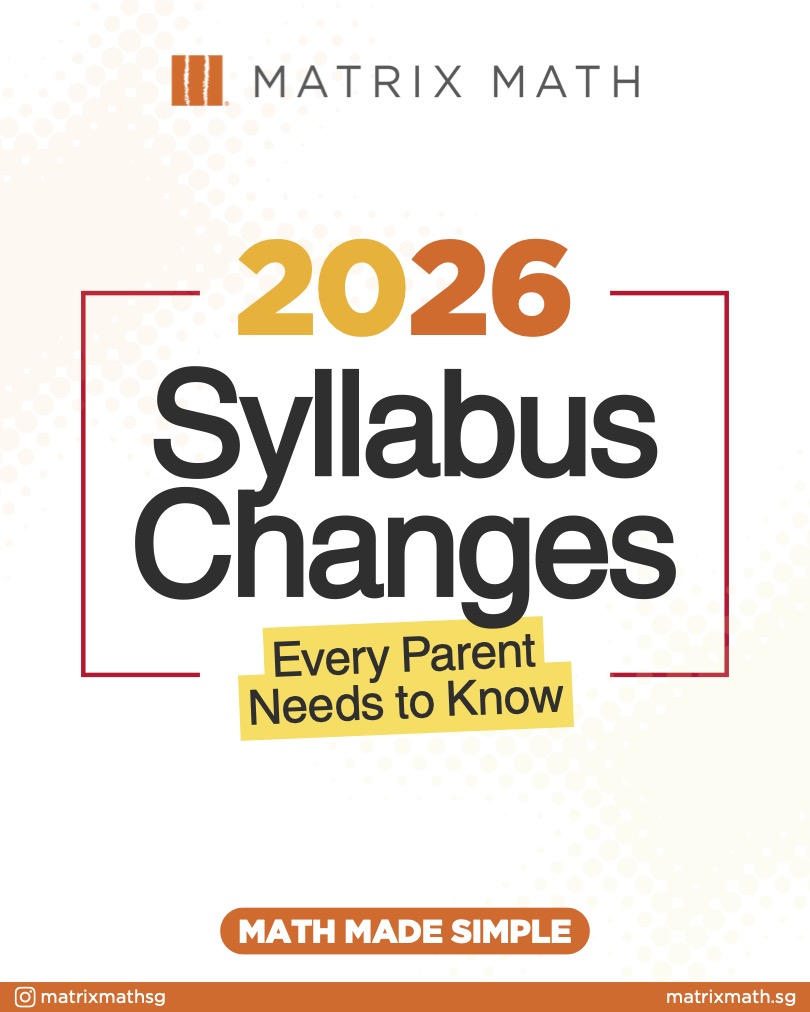
2026 MATH SYLLABUS CHANGES

WHAT EVERY PARENT NEEDS TO KNOW

2026 Syllabus changes

The Ministry of Education has announced several important updates to the 2026 Primary Math syllabus, including shifts in topic placement, assessment format, and mark allocation. These changes will significantly affect how students prepare for upper primary Math, especially in topics like Ratio, Averages, and visualization skills such as Nets — as outlined in our guide .

At Matrix Math, we stay ahead of syllabus updates to ensure our students receive the best math tuition support aligned with the latest MOE requirements. To help parents understand these changes clearly, we’ve prepared a concise, easy-to-read 2026 Math Syllabus Changes Guide.

This guide explains:

  • Topics moved across levels (e.g., Ratio & Average shifting to P6, Nets introduced in P4)

  • Format changes such as increased MCQ weighting and reduced long-answer questions

  • Paper duration and mark distribution adjustments in P5 & P6

  • What these changes mean for your child’s preparation


Click below to download your free guide and learn how to keep your child ahead of the new math syllabus.


WHAT MAKES US

DIFFERENT?

In this video, former Matrix Math students reunite to share their gratitude and fond memories of their journey with us. Many have been part of Matrix Math from primary school through Secondary 4. Their stories highlight the encouraging learning culture and supportive environment we provide, which sets us apart as a leading provider of math tuition in Singapore. At Matrix Math, we inspire a love for problem-solving and foster confidence, helping students excel in their learning journey.

math tuition center in singapore the matrix method
different 01 icon

GET REAL RESULTS WITH THE MATRIX METHOD

The Matrix Method, a thought process inspired by how successful students approach and process complex information. Through keen observation, we have cracked the code to understand how these students efficiently solve challenging word problems and translate them into systematic solutions. The result is a streamlined approach encompassing 5 simple and easy-to-follow steps.

However, our approach goes beyond just math problem-solving. At Matrix Math, we are committed to nurturing well-rounded learners by instilling good learning habits and cultivating essential thinking skills in our students. These skills are the building blocks of future success, extending far beyond the realm of mathematics.

matrix math tuition center study math smarter
different 02 icon

STUDY SMARTER

We prioritize academic excellence with a strategic approach, introducing "ROL" - Return on Learning.

To achieve the highest ROL, we structured our lesson plans to build upon previous knowledge and prepare students with essential skills for future concepts. We focus on laying strong foundations through a building-block method, gradually adding complexity to ensure students grasp each concept effectively.

As forgetting is a natural part of the learning process, our programme emphasises continual reinforcement, ensuring students can retain and apply their mathematical skills effectively.

With our math tuition center approach, students experience a comprehensive learning journey that not only enhances their math proficiency but also ensures lasting retention and application of knowledge.

matrix math tuition center foster independant learner
different 03 icon

INDEPENDENT LEARNER

We recognize that cultivating independence is a crucial aspect of a child's development. Independent learners are students who take ownership of their learning, thinking critically, and seeking answers on their own.

To foster independent learning, our teachers are specially trained to encourage students to think critically and question concepts instead of merely providing answers. We believe in nurturing their curiosity and problem-solving skills.

In addition, we have developed a range of self-learning online lessons and videos allowing students to explore essential topics and concepts at their own pace independently.

THE IMPORTANCE OF

HEURISTIC PROBLEM-SOLVING SKILLS

Importance of Learning Math

Mathematics plays a crucial role in shaping a student’s cognitive abilities, laying the groundwork for logical thinking, problem-solving, and decision-making. At Matrix Math, we believe that a strong foundation in math is essential not only for academic success but for navigating everyday life. From managing finances to interpreting data, math is everywhere, and mastering it equips students with essential life skills.

Challenges in learning math

However, the journey to math proficiency isn’t without challenges. Many students struggle with complex concepts, abstract reasoning, or problem-solving techniques that require deeper understanding and application. This is where we step in. At Matrix Math, we specialise in turning these challenges into learning opportunities through our structured, expert-guided approach. Our curriculum is meticulously designed to break down difficult topics and build strong problem-solving skills, focusing on areas like heuristic techniques to simplify even the toughest math problems.

BENEFITS OF MASTERING MATHS

The benefits of mastering math extend far beyond the classroom. Students who develop confidence in math often see improvements in critical thinking and analytical skills, which can lead to success in various fields. At Matrix Math, we are committed to guiding students through the challenges of math and helping them unlock their full potential with a tailored, effective programme.

image1
commitment popup
OUR COMMITMENT
We’re committed to empowering students to excel in math by overcoming common challenges and constantly exploring ways to simplify math.
Our unwavering commitment is reflected in our proprietary and award-winning Matrix Math method.

OUR PROGRAMMES

We have a wide range of programmes for children of all ages.

Features prerecorded video lessons by our skilled Math specialists, allowing students to explore math problem-solving concepts at their own pace.

A step-by-step learning journey focuses on closing knowledge gaps in maths through problem-solving skills rather than drilling exercises.

Designed to equip your child with the essential skills to excel in PSLE math.

Crafted based on in-depth research of top school examination papers, ensuring your child is well-prepared to tackle O-level Math Paper.

LEAD PROGRAMME MANAGER

Matrix Method Jason Hiak

JASON HIAK

An alumnus of Nanyang Technological University with a degree in Accountancy, Jason furthered his education with a Master’s from Manchester Business School.

As a Registered Chartered Accountant, Jason combines his deep analytical skills with over 20 years of teaching experience in Mathematics, specialising in primary school math.

His expertise and dedication have made him a key figure in shaping the curriculum and nurturing young minds at Matrix Math.

DISCOVER ALL OUR

STUDENTS' SUCCESS STORIES

MATH TIPS AND TRICKS

Valuable tips and tricks ranging from strategies to combat stress as exams approach to learning effective techniques for enhancing formula memorization.

Matrix Math Featured in The Straits Times: Helping Children Handle PSLE Math Without Panic

16 March 2026

BY: Jason Hiak

By Jason Hiak, Programme Manager, Matrix Math When The Straits Times recently explored why PSLE Math can trigger panic, meltdowns and self-doubt in students, the issue resonated with many parents. The article, “Cracking the PSLE maths code: Avoid meltdowns, change mindsets,” highlighted a problem many families in Singapore already know well: a child may understand the topic, yet still struggle badly when faced with a complex, unfamiliar, multi-step PSLE Math question. Matrix Math was featured in the article as part of this wider conversation, and the issue is one we have seen repeatedly over the years. In working with Primary 6 students, I have seen many capable children break down not because they do not know the concepts, but because they panic when a question looks unfamiliar. Once they learn how to slow down, unpack the structure of the problem, and work through it step by step, their performance often improves significantly. That distinction matters. PSLE Math Is Not Just Testing Knowledge One of the biggest misconceptions parents have is this: if a child knows the concepts, the child should be able to do the paper. That is not always true. A child may know fractions.A child may know ratios.A child may know volume.A child may know the usual methods. But when those ideas are combined into one layered question, many students freeze. That is why PSLE Math can feel so unforgiving. It is not simply testing whether a child has seen the topic before. It is testing whether the child can: For some students, the issue is not content weakness. The issue is panic, poor structure, and a breakdown in thinking under stress. Why Smart Students Still Lose Marks After many years of working with upper primary students, one thing is clear: the gap between stronger students is often smaller than parents think. In many cases, an AL1 student and an AL3 student may not differ very much in raw knowledge. The real difference often appears in the exam itself: This is why simply giving a child more and more practice papers does not always solve the problem. In fact, this is something we addressed directly on our Matrix Math YouTube channel: YENNI EXPLAINS | Your Child Doesn’t Need More Practice Papers for PSLE Math That video explains a hard truth many parents overlook: doing more papers without fixing the child’s thinking habits can become unproductive. The child may get more exposure, but not necessarily more clarity. The Parenting Mistake That Often Makes Things Worse There is another uncomfortable truth. Sometimes, the problem is not only the worksheet or the exam paper. Sometimes, the adult response around the child makes the situation worse. When children repeatedly hear messages that increase pressure, fear, or self-doubt, they may become more fragile in front of difficult questions. They stop seeing challenge as something to work through. They start seeing it as a threat. We discussed this in another Matrix Math YouTube video: YENNI EXPLAINS | The Parenting Mistake That Lowers Your Child’s Grades Parents usually mean well. But if the environment around the child becomes too tense, too reactive, or too focused on performance alone, the child’s ability to think clearly during exams can deteriorate. That is one reason why mindset matters. Not in a motivational slogan sense, but in a practical academic sense. A child under unnecessary emotional strain will often perform below what he or she actually knows. What Parents Can Do Instead The good news is that these problems are not fixed traits. Students can be taught to become calmer, more systematic, and more resilient when facing difficult questions. Parents can support this too. One of the most practical ways is to help the child review mistakes properly instead of simply moving on to the next worksheet. At Matrix Math, we have produced a free parent guide on how families can help children learn from mistakes more effectively. This is directly related to the same issue discussed in The Straits Times: many children keep repeating the same types of errors because there is no proper process for reviewing what went wrong. Common repeated mistakes include: Without a system for reflection, practice alone can become shallow. The child keeps doing more, but does not really improve the underlying habits. A mistake log helps shift the focus from “How many questions did you do?” to “What exactly went wrong, and how do we stop this from happening again?” That is a much more intelligent way to improve. Download the free guide here: How Parents Can Help Their Children Learn From Mistakes What Matrix Math Believes About PSLE Math Preparation At Matrix Math, we do not believe that PSLE Math success comes from brute-force drilling alone. Students need content mastery, yes. But beyond that, they need to develop the thinking habits required for higher-order problem solving. That includes learning how to: This is why the public conversation raised by The Straits Times matters. It helps parents see that a child’s struggle in Math is not always a simple matter of “not studying enough”. Sometimes the child needs a better process.Sometimes the child needs better emotional handling.Sometimes the child needs more deliberate correction of repeated mistakes.Sometimes the child needs to be taught how to think, not just what to do. Explore the Related Matrix Math Resources To support parents further, we have created related resources connected to the same issues raised in the Straits Timesdiscussion. Watch on YouTube Download the Free Guide These are directly related to the same real issue: helping children handle challenge better, reduce repeated mistakes, and approach PSLE Math in a more productive way. About Matrix Math Matrix Math is a Singapore Math tuition programme aligned with the MOE syllabus. We focus on helping students build strong understanding, structured reasoning, and greater confidence in handling challenging Math questions at the Primary and Secondary levels. Our approach is not just about getting through worksheets. It is about helping students think more clearly, make fewer repeated mistakes, and become more composed problem solvers. Looking for Help With PSLE Math?

How to Help Your Child Memorise Maths Formulas Effectively

27 February 2026

BY: matrixmath

Mathematics can seem like a complex and highly abstract subject, but mathematical formulas provide a practical framework that helps students understand questions and arrive at the correct answer. To help your child memorise these formulas, you can support their learning with several encouraging techniques. Going Beyond Rote Memorisation Although memorisation can be helpful, maths memory relies more on your child’s ability to understand the concepts behind formulas and apply them effectively to solve specific problems. Simply memorising a formula will not work, as there is no real comprehension behind the formula’s underlying concepts in relation to solving specific questions. Under exam time pressure, rote memorisation may hinder problem-solving because your child cannot correctly apply the maths formula to find the answer. Panic in such a situation can prevent them from thinking clearly and undermine their confidence in maths. With sufficient practice, your child can gradually store these maths formulas in their long-term memory. This reduces cognitive load on their short-term working memory while they focus on a question, enhancing their ability to quickly solve it by applying the formula’s concepts accurately. Techniques to Memorise Maths Formulas The right approach can make a substantial difference by helping your child memorise maths formulas and apply them in the right situations. Use Visualisation Visual aids and mental imagery, such as graphs, charts, and flashcards, can be quite helpful for memorising maths formulas, as they provide clear details and examples of how a formula works. You can even assign visual cues to a formula’s components to make it easier for your child to remember them. The more unique they are, the more likely they are to recall the entire formula. Real-Life Examples Another aspect of visualisation involves using real-world examples that relate to a maths problem. Using these examples is a great way to help them understand more abstract maths concepts that are difficult to express with visual aids. This way, you can make the formula more approachable and memorable for your child, making it easier to recall and know when to use it. Mnemonics Mnemonics are verbal memory aids that provide a shortcut to remembering maths formulas. Much as visualisation uses imagery to aid memorisation, mnemonics rely on catchy or funny phrases and abbreviations to quickly recall a maths formula. One classic example is recalling PEMDAS, the order of operations (parentheses, exponents, multiplication and division, addition, subtraction). Your child could use the common mnemonic “Please Excuse My Dear Aunt Sally” to make it easier to recall this concept. Break Down into Chunks Complex maths questions can be challenging to understand all at once, so your child should learn to break them down into manageable chunks. This process involves breaking down a math question or complex equation into multiple components (or chunks) that are easier to understand. Chunking reduces your child’s cognitive load and improves their confidence when answering complex questions. Memory Palaces A memory palace uses recognisable locations to form a mental map that your child can use to memorise maths formulas. Your child would associate certain formulas with specific places in this memory palace, where each formula may be visualised as a prominent part of a room within the palace. They only need to visualise themselves exploring the memory palace’s rooms to recall the specific mathematical formulas they memorised. This vivid mental image they create facilitates faster recall, helping them solve maths questions with little difficulty. Repetition and Consistency Practice makes perfect, and your child needs plenty of it to allow them to memorise each maths formula that they are learning or have learned. Regular exercise with worksheets, past-year papers, and quizzes can help cement their understanding of how to use the relevant formulas for the correct questions. You can mix things up with fun, engaging activities that test their knowledge without making it feel like another classroom lesson. A balance of fun and focus can keep your child learning at all times. Study Groups Part of that consistency can come from study groups with your child’s peers, including classmates, each of whom brings different degrees of mathematical understanding to the table. As such, this allows students to learn from one another, deepening their understanding of maths formulas. This collaborative effort, in turn, can greatly boost your child’s self-esteem and counter maths anxiety. How Parents Can Support Their Child’s Maths Memory As parents, there are various ways you can support your child’s maths memory through positive reinforcement and other methods that maintain their curiosity and drive to learn new maths concepts. Avoid Cramming Repetition and consistency only work if they are set on a regular schedule, not back-to-back without breaks. This means that all work and no play makes it harder for your child to stay focused, and they may end up memorising what they learned without understanding the finer points behind each maths formula. Let them have some time to rest and relax before they get back to their lessons. Offer Encouragement Positive encouragement is another way to help your child, as it makes them feel that their learning efforts are paying off. Even if they make mistakes, offer them a shoulder they can lean on and tell them it is okay to fail occasionally. The important thing is to take the time to learn where they went wrong and pick themselves up to improve. Do what you can to help them up and keep their learning journey going. Minimise Distractions Setting boundaries and creating a conducive study space can help your child’s concentration and retention of maths formulas. It is advisable to keep gadgets and toys out of sight to avoid distracting them while they are studying. Matrix Math provides personalised maths tuition to help students strengthen their mathematical fundamentals across various topics, including memorising and understanding key concepts. Contact us today to learn more about our teaching approach! Read Also: Mastering Problem-Solving with Heuristic Maths in Singapore How Maths Tuition Helps Weak Students Improve Faster How to Help Your Child Develop Early Math Skills Effective Tips To Prepare

LOCATE US

FAQs ABOUT MATH TUITION

How can math tuition benefit students?

Math tuition provides the additional support that some students may need on top of school. In schools, the attention of the teacher is divided across a class of 40 students. This means that the pace of learning in such a big group may not necessarily be optimal in achieving your child’s academic potential. With Math tuition, foundations are reinforced and learning gaps are bridged. There will also be greater exposure to enhance the mastery of the subject.

How are math lessons conducted at Matrix Math to engage students?

Our classes are conducted in a small group of 6. Our curriculum follows the syllabus as stipulated by MOE. Lessons are structured, with topical lessons being taught with guidance as well as a chance for students to assess their own learning through practice questions. We also provide complimentary online review lessons each week to cover the practice questions assigned. This allows for reinforcement of concepts through the additional support.

What are the qualifications of Matrix Math tutors?

Our tutors are trained to carry out the lesson in a way that is consistent across all our centres. We use the same materials so that only the most effective methods are delivered with deviations in teaching methods minimised.

Does Matrix Math offer online or hybrid classes?

We offer hybrid classes, which means that your child gets the flexibility of attending both on-site as well as online. The teacher will be conducting the same lesson to students both on-site and online, delivering effective lessons without compromising on quality.

What sets Matrix Math apart from other math tuition centers in Singapore?

Matrix Math stands out with its heuristics-based learning approach, which helps students develop strong problem-solving skills rather than relying on rote memorization. We focus on conceptual understanding, ensuring students grasp the “why” behind mathematical principles for deeper learning. Our dedicated and experienced teachers provide personalized guidance, helping students gain confidence and excel. With a proven track record of results, many students show significant improvement in both their grades and problem-solving abilities after joining our programme.

bottom cloud orange 1
footer text popup
footer kids
footer text popup